Knowledge Graph
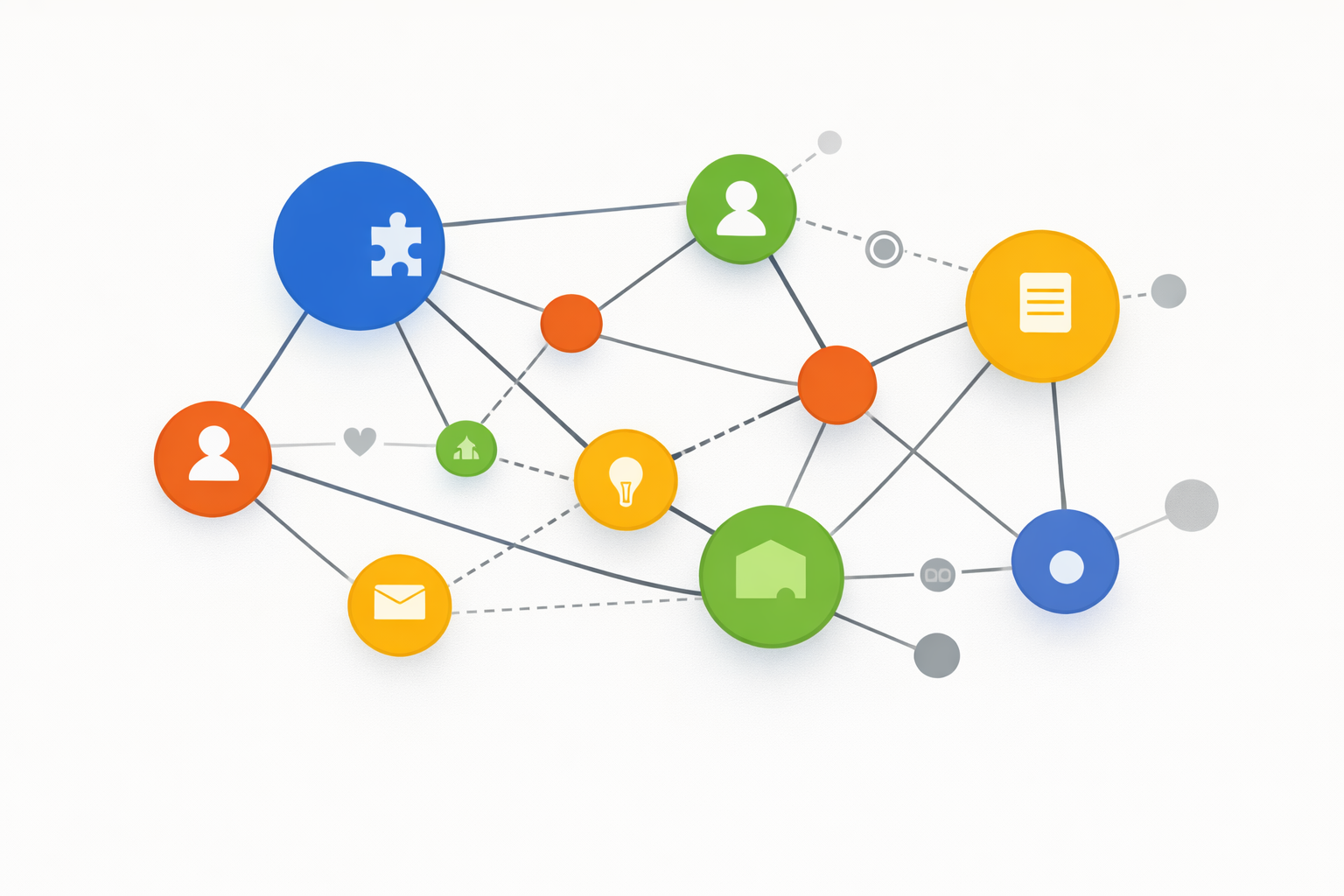
A structured representation of real-world entities and the relationships between them, stored as a network of nodes (entities) and edges (relationships). Knowledge graphs capture factual information in a machine-readable format.
Why It Matters
Knowledge graphs provide structured, reliable knowledge that can ground AI responses, answer complex queries, and power recommendation and discovery systems.
Example
Google's Knowledge Graph connecting entities like [Albert Einstein] → [born in] → [Ulm, Germany] → [located in] → [Baden-Württemberg], enabling rich search results.
Think of it like...
Like a mind map on steroids — instead of just listing facts, it shows how everything connects to everything else, creating a web of knowledge.
Related Terms
Graph Neural Network
A type of neural network designed to operate on graph-structured data (nodes and edges). GNNs learn representations of nodes, edges, or entire graphs by aggregating information from neighbors.
Ontology
A formal representation of knowledge within a domain that defines concepts, categories, properties, and the relationships between them. It provides a shared vocabulary and structure for organizing information.
Knowledge Base
A structured or semi-structured collection of information used by AI systems to retrieve factual data. In the context of RAG, it typically refers to the document collection that the system can search.
Semantic Web
A vision for extending the World Wide Web so that data is machine-readable and interconnected through shared standards and ontologies. It enables automated reasoning and knowledge discovery.